Books
Summer 2026 Book Recommendations

The Infinity Machine by Sebastian Mallaby
Some years ago, I read "The Power Law" by Sebastian Mallaby. I found that book, about the history of venture capital, to be a very informative read and I was excited for this one given the quality of his research. It did NOT disappoint. This book reads mostly as a biography about Dennis Hassabis, the CEO of Google Deep Mind and the 2024 winner of the Nobel Prize in Chemistry. The book covers Hassabis' early life, his time as a child prodigy in chess (with an ELO rating of 2300 he was nearly an IM), his work in the video game industry, and then his founding of Deep Mind. As Mallaby covers the history of Deep Mind, the book also becomes a broader biography of the AI industry between 2010 and 2026. I found the book very even-handed even as it leans towards Hasabis being more of a scientific-minded missionary (in spite of his obvious skill at fund raising). Some of the other players in the story, like OpenAI's Sam Altman, come across as more mercenary and less mission-driven. A lovely read overall and highly recommended!
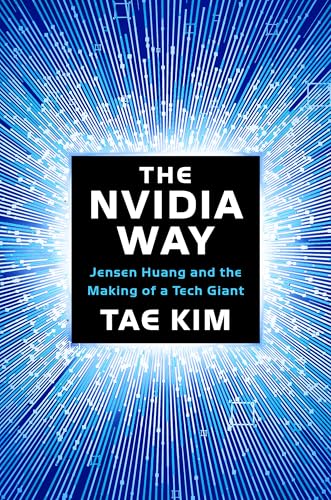
The Nvidia Way by Tae Kim
This book is not just about Nvidia but also a semi-biography of its founder and CEO, Jensen Huang. If the Hassabis story was almost entirely the software side of the AI revolution, this book supplements it with the hardware side of the story. This book is similar to "The Thinking Machine" by Stephen Witt that came out about a year ago. It paints Jensen Huang as a visionary who kept seeing a few years ahead and succeeded in skating to where the puck was going to be. His early reorienting of Nvidia to be ready for the deep learning revolution has resulted in Nvidia going from about $6/share in early 2020 to about $200/share in the first half of 2026. If AI now feels like an arms race, then the pre-eminent supplier for weapons is Nvidia. This is in no small measure due to Huang's foresight - and flawless execution.

Project Maven by Katrina Manson
Artificial Intelligence is being used not just in business or in consumer applications but also in the military. The use of AI in war is, in fact, a story that doesn't get enough media attention. Both the US and China are scrambling for an edge in a future conflict. This will likely be over Taiwan but could be anywhere in the world as the incumbent and the challenger size each other up. This book, about the US Department of Defense's Project Maven, is told through the story of the protagonist, a Marine Corps colonel Drew Cukor who in his own way was prescient about the role AI would play in a future war. There is a lot of discussion about how companies like Google struggled with managing employee dissent about working with the DoD while other companies like Palantir sued the DoD itself to get the right to work with them! Most Definitely, a book to read in 2026.

The Algorithm by Jonathan McNeill
McNeill was a former president at Tesla. He was already a successful founder when he got hired by Musk and the book is a distillation of five principles that Musk instituted at his companies. In brief these are to 1) Question requirements, 2) Delete unnecessary steps, 3) Simplify, 4) Accelerate, and 5) Automate. In that order. McNeill illustrates these principles with stories from his time - not just at Tesla but also at other companies. I was a bit nervous about this book being a mild biography of Musk but to McNeill's credit he stays miles away from the rest of Musk's personal life and beliefs and stays laser-focussed on the principles. It's a short book packed with a lot of insights and I recommend it.

Shattered Lands by Sam Dalrymple
Most people in India (and I imagine, in Pakistan) know about Partition. This was the cleaving of India in 1947 into a Muslim Pakistan and a secular India. Sam Dalrymple (son of the more famous William Dalrymple) sets this within a larger historical context of not just one but five partitions on the Indian subcontinent. I was not even aware that Aden in Yemen was once part of the Indian empire of Britain. Burma was also administered from India and briefly could have been part of an independent Indian nation but for reluctance not just from the Burmese leader Aung San but also, surprisingly, from Mahatma Gandhi. The junior Dalrymple has written a very well researched debut book that is a must read for anyone interested in the history of India in the decades before and after independence.